Back to Articles
Before It Reached the Kitchen, It Was Coming Through the Speakers
Emancipation, independence, Bristol, sound-system culture and a connection worth celebrating
The first week of August holds a particular significance in Jamaica.
On 1 August, Jamaica marks Emancipation Day. Five days later, on 6 August, it celebrates Independence Day.
They are two different moments in history, separated by more than a century. But there is a much bigger story around them, about freedom, identity and a culture whose influence has travelled far beyond Jamaica itself.
Including, very visibly, to Bristol.
With Sister Gee’s opening at Lakota around Jamaican Independence Day, it felt like a good moment to look a little further into that history. Not because Sister Gee’s is somehow the end point of the story, but because the connection between Jamaican culture, Bristol and Lakota goes back much further than our kitchen.
For decades, you could already hear it coming through the speakers.
From emancipation to independence
Emancipation Day commemorates one of the defining moments in Jamaican history.
The system of enslavement was legally abolished across most of the British Empire from 1 August 1834, but freedom did not arrive as simply as that date suggests.
In Jamaica, many formerly enslaved people were forced into an apprenticeship system that required them to continue working for their former enslavers. Full emancipation came four years later, on 1 August 1838.
It followed generations of resistance in Jamaica itself, from everyday acts of defiance to major uprisings, alongside the wider movement for abolition.
Emancipation Day is also a time for remembrance. Respect for ancestors and elders holds an important place in Jamaican culture, and the day is an opportunity to recognise the generations who resisted enslavement, fought for freedom and carried their culture forward.
More than a century later came another defining moment.
At midnight on 5 August 1962, the British flag was lowered and the new Jamaican flag raised. On 6 August, Jamaica became an independent nation.
Emancipation and independence aren’t interchangeable. One marks the end of enslavement, the other Jamaica becoming independent from British colonial rule.
But sitting just five days apart in the Jamaican calendar, they make the beginning of August a significant time for both remembrance and celebration.
The story that surrounds those dates is much bigger than anything we could cover here. One part of what followed, though, has a very particular connection to Bristol.
Jamaica and Bristol
Bristol’s relationship with Jamaica and the Caribbean isn’t a simple one.
The city’s history and wealth were deeply entangled with an economy based on the transatlantic trade in enslaved Africans. Bristol merchants financed voyages, participated directly in that trade and profited from goods produced through enslaved labour in the Caribbean.
That history is part of Bristol.
So is what happened much later.
From the 1950s onwards, Caribbean families arriving in Bristol established communities, particularly around St Pauls, and helped shape the city that exists today.
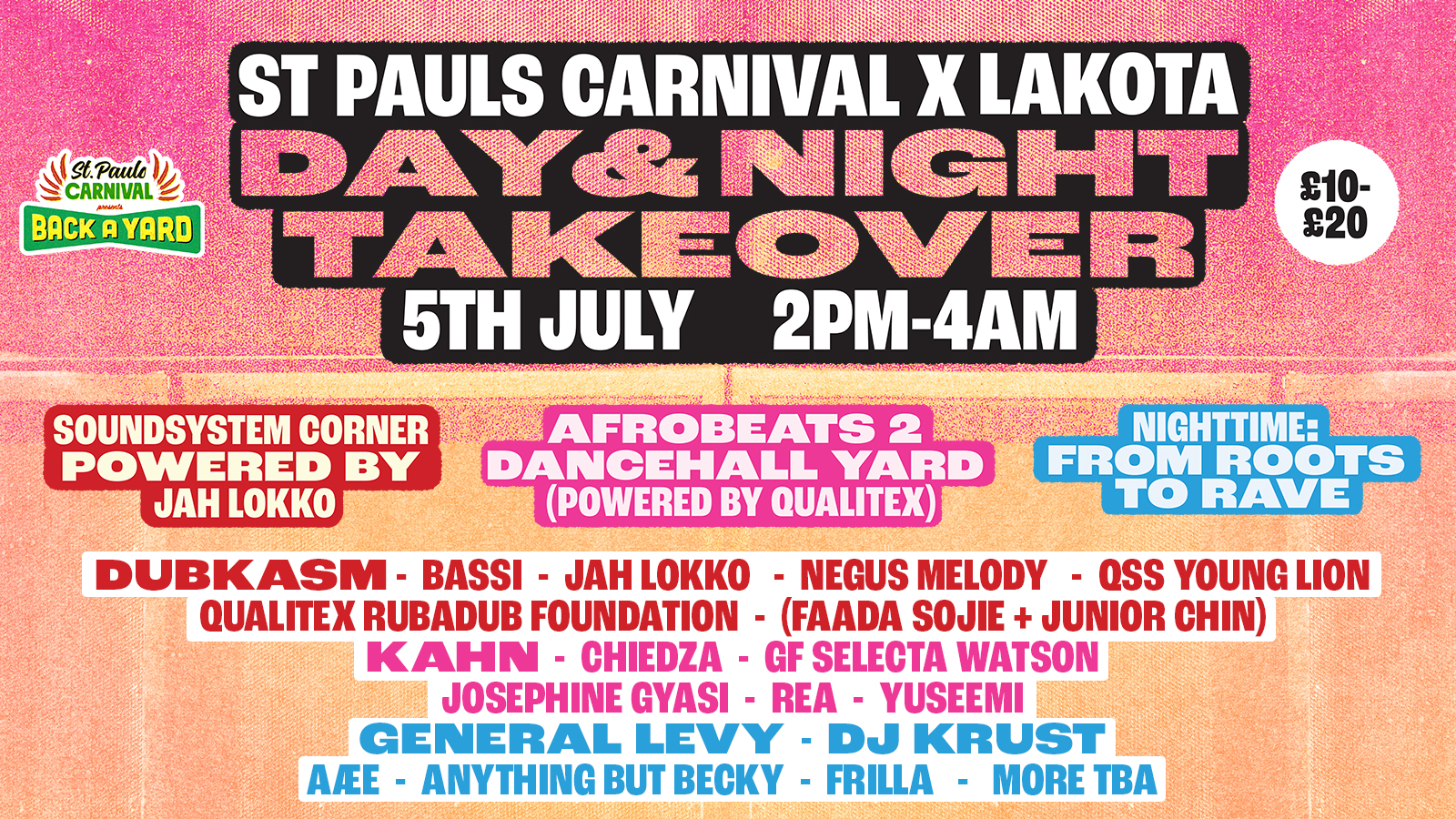
One of the clearest examples is St Pauls Carnival.
The first St Pauls Festival took place in 1968, created by members of Bristol’s African-Caribbean community alongside local residents. Some of those involved had also been connected to the Bristol Bus Boycott, the landmark 1963 campaign against racial discrimination by the Bristol Omnibus Company.
Over time, the festival developed into the Carnival we know today.
The conversation about how Bristol understands this history continues today. Lakota is currently home to two globes from The World Reimagined, a national art and education project exploring the history and continuing impact of the transatlantic trade in enslaved Africans.
They’re part of a much wider effort across Bristol to understand that history and its continuing impact, rather than treating it as something that simply ended in the past.
Anyone who has been to St Pauls Carnival will also know how central music and sound systems are to the experience.
And that’s where this history starts to intersect with something very familiar to Lakota.
The sound of Bristol
Sound-system culture developed in Jamaica and travelled to Britain with Caribbean migration.
Powerful, often custom-built speaker systems, selectors, DJs and MCs became an important part of Caribbean community and musical life in Britain.
Its influence spread much further.
In Bristol, reggae and dub existed alongside punk, soul, funk, hip-hop and electronic music. Different scenes and communities borrowed from one another and created something particular to the city.
By the 1980s, crews including The Wild Bunch were emerging from that environment. Members would later form Massive Attack, and Bristol developed the bass-heavy musical identity that became recognised internationally as the Bristol sound.
Those influences continued to move and change, and can be heard across jungle, drum & bass, dubstep, UK bass and plenty of the music that came afterwards.
At Lakota, that connection is particularly easy to recognise.
It was already in the building
Lakota has been part of Bristol nightlife for more than three decades.
Scenes have arrived, disappeared and come back again. Genres have changed and crossed over. Generations of Bristol have come through the doors.
Bass music has always felt particularly at home here.
Reggae, dub, jungle, drum & bass, garage and dubstep have all occupied these rooms.
Anyone who has stood in the Main Room when a proper sound system is running probably understands why.
On the right night, you don’t really listen to the bass. You feel it through the building.
Most people aren’t standing there at two in the morning wondering about the history of the sound coming out of the speakers.
But it has a history.
And knowing a little more about that history changes how you think about the music and culture that have become such a familiar part of Bristol.
From the speakers to the kitchen
This August, Sister Gee’s opens at Lakota.
It’s a Jamaican kitchen built around good food, family, big flavours and bringing people together.
Jerk cooking, pimento, Scotch bonnet, rum, spice and proper comfort food are at the heart of it, rooted in Jamaican food traditions and the importance of food, family and gathering.
Its opening around Jamaican Independence Day gives us another reason to celebrate a connection that was already here, this time through food.
What we can do is recognise where the culture we’re enjoying comes from, celebrate it properly and be curious enough to understand more about it.
Food, like music, can carry culture a very long way.
Recipes and flavours travel with people. They get shared between families and communities, find new audiences and become part of new places.
Bristol is full of examples of culture travelling, being shared and finding new homes.
For us, recognising that history also means supporting the people and organisations doing the work around it today.
Lakota already supports the Bristol Legacy Foundation and will continue to do so. The campaign for African reparatory justice is part of a much wider and ongoing conversation about how we respond to the continuing legacy of the transatlantic trade in enslaved Africans, and we recognise and support the work being done in Bristol and beyond.
We don’t need to overstate our role in any of this. We’re an events venue and cultural space in Bristol. But we’re also part of a city with this history, and a venue that has benefited enormously from the music, creativity and culture of Black and Caribbean communities.
For us, celebrating that culture and supporting the people and organisations doing this work should sit alongside one another.
A week for remembrance and celebration
Emancipation Day and Jamaican Independence Day mean different things.
1 August is a day to remember emancipation and the generations who resisted enslavement and fought for freedom.
6 August celebrates Jamaica becoming an independent nation and everything Jamaican identity has become and continues to become.
Between those dates sits an enormous amount of history.
We’re not going to pretend we can tell all of it.
But we can understand a little more about the things that surround us.
In Bristol, Jamaican and wider Caribbean influence can be found in communities, Carnival, food and generations of music.
At Lakota, one of the places we’ve experienced that influence most clearly has always been the dancefloor.
Sister Gee’s gives us another way to celebrate that connection through food.
And perhaps that’s the connection worth recognising this week.
Before it reached our kitchen, it had been coming through the speakers for a very long time.
Related Articles